
Not long after he鈥檇 come out of the closet, Mark was at a party with his friends. At some point that evening, a group of guys approached Mark and told him they suspected their roommate, Joe, was also gay. They asked if Mark would be willing to talk with Joe about this. 1
Mark thought it was an odd request, but he went upstairs and found Joe in his room. 鈥淵our roommates are questioning your sexuality, and asked me to talk with you,鈥� Mark said. 鈥淚f you want to talk, that鈥檚 fine, but I thought you should know what they鈥檙e saying.鈥� Joe didn鈥檛 want to talk about it, and the two rejoined the party downstairs. (All along, this had simply been a cruel prank by Joe鈥檚 roommates, intended to put him and Mark into an awkward situation.)
By the time Mark got up to leave, Joe had gotten quite drunk. He followed Mark outside, and as Mark walked down the steps, Joe yelled 鈥渇aggot鈥� and punched him in the face. Mark picked himself up and hurried home.
A year went by, during which Mark avoided Joe and his friends. He lived in fear, and wondered if this is what the rest of his life as a gay man would be like. Just before graduation, Mark heard Josh Bacon, director of James Madison University鈥檚 Office of Judicial Affairs, speak in one of his classes about something called 鈥渞estorative justice.鈥� It sounded like something that might be useful in addressing what happened outside the party that night, and Mark approached Bacon after class to ask about it. (Mark was specifically interested in a restorative justice approach; he declined to pursue the matter through the legal system or JMU鈥檚 traditional judicial affairs process.)
Bacon thought the incident would be an ideal one to address through a restorative process and agreed to help set up a meeting. For his part, Joe had also been troubled by the punch he threw that night, and immediately guessed what was on Bacon鈥檚 mind when he called from judicial affairs. Joe agreed to meet and talk with Mark.
In experimental stage
Having taken graduate-level courses in restorative justice at 91短视频, Bacon was in the experimental stage of using restorative processes to address a student conflict at JMU. He pulled out all the stops. He rearranged his office furniture into a circle, and used a medal commemorating JMU鈥檚 centennial as a 鈥渢alking piece鈥� that was passed from person to person. 2
Mark and Joe sat in that circle for an hour and a half. Mark told Joe about the fear he鈥檇 lived with since that night. Joe apologized, and told Mark how his sexuality had been repeatedly questioned before Mark approached him at the party, and how, in the drunken, late-night logic of the moment, he鈥檇 decided to respond in the manliest way he could think of: with his fists. Things didn鈥檛 end with complete reconciliation and fast friendship between the two, but Mark and Joe reached a point of empathy for one another. It was a dynamic that Bacon had very rarely seen with discipline cases he had handled through the traditional judicial affairs process. Afterwards, both Mark and Joe independently contacted Bacon to thank him for what he鈥檇 done 鈥� a telling indicator of how powerful the process had been for both of them.
鈥淚 can count on one hand how many thank-you cards I鈥檝e gotten in judicial affairs,鈥� says Bacon, who is now associate dean of students. 鈥淭his sold me on restorative justice.鈥�
Today, looking back on this early use of restorative justice in his office, Bacon emphasizes how radically different things could have been had the incident been handled by the traditional student discipline book. Joe鈥檚 violent actions could have been prosecuted as a hate crime, involving multiple hearings during which the lawyers鈥� clocks would have been spinning at some frightful hourly rate. Even more importantly, Mark and Joe would not have had the opportunity to speak directly and honestly to one another, meaning neither would have had the 鈥渃hance for healing, for apologies, for understanding,鈥� says Bacon.
“Blown away” by Zehr’s class
During most of the 15 years he鈥檚 spent so far in judicial affairs at JMU, Bacon came across the term 鈥渞estorative justice鈥� from time to time. Like many in his field, he鈥檇 generally held a vague and incorrect notion that it mainly involved restitution after some sort of wrongdoing. At some point, he became aware that Howard Zehr, often called the 鈥済randfather of restorative justice,鈥� just so happened to work practically next door at 91短视频, and he decided to check out the whole restorative justice thing in a little more detail.
鈥淲hen I took Howard鈥檚 class, I was blown away,鈥� says Bacon, who began buying every book he could find on the subject of restorative justice and went on to complete a graduate certificate program at 91短视频鈥檚 Center for Justice and Peacebuilding. 3 鈥淚t just recharged me in how to deal with student behavior and student conduct.鈥�
Bacon quickly realized that the traditional judicial affairs process, which focuses on holding offenders accountable, was 鈥渏ust totally missing鈥� the needs of victims of crime and hurt. As rapidly as he could, he began introducing the practices and theory of restorative justice to his work with student conduct at JMU. Sometimes, this took the form of a full-blown, sit-in-a-circle-and-talk meeting like the one between Mark and Joe. More often, though, this simply entailed a new approach to things like alcohol violations, which account for the vast majority of cases that end up on the judicial affairs docket. Instead of simply doling out consequences to fit a certain violation, Bacon and his staff began asking students to think about how their behavior had hurt people around them, and what steps they could take to fix things.
鈥淲e don鈥檛 ask what students deserve. We ask what they need to learn so they don鈥檛 end up back here,鈥� says Chris Ehrhart, MA 鈥�11 (conflict resolution), the restorative practices coordinator in the judicial affairs department.
In addition to the meeting between Mark and Joe, Bacon and his staff began using talking circles聽and other restorative justice processes to handle a number of other very high-profile cases at JMU. After several successful cases, restorative justice 鈥渏ust sold itself鈥� to other administrators at the university 鈥� some of whom, like Bacon, initially looked at restorative justice with misunderstanding or skepticism.
Restorative justice not “soft”
One misconception that Bacon had to address is that restorative justice is a 鈥渟ofter鈥� approach that doesn鈥檛 hold offenders accountable for their actions. One strong argument to the contrary is that restorative justice techniques have been and are being used across the country and world to address all sorts of crimes and wrongdoing that are far more serious that anything handled by a university discipline office.
Then there鈥檚 the fact that it鈥檚 simply difficult for an offender to face someone whom they鈥檝e hurt. Often, it鈥檚 easier to accept a suspension or do some community service than to look a victim in the eye and talk about what鈥檚 happened. Students who go through a restorative justice process don鈥檛 come out telling people they 鈥済ot off easy,鈥� Bacon says. 鈥淭hey come out changed.鈥�
And so, in a time when 鈥渟ecurity鈥� and 鈥渢hreat assessment鈥� have become campus safety buzzwords, restorative justice鈥檚 very different ideas of victim-offender conferencing and community-building have become the foundation of JMU鈥檚 approach to student discipline.
Zehr, who remains in close touch with Bacon, says that鈥檚 largely due to Bacon鈥檚 whole-hearted embrace of restorative justice and his use of it in 鈥渟ome really high-profile cases.鈥�
“He took risks”
鈥淗e demonstrated restorative justice. He didn鈥檛 just talk about it. He took risks,鈥� says Zehr. 鈥淗e鈥檚 so well-placed at JMU and with his background in organizational management 鈥� he began to envision getting the entire university to buy into it.鈥�
Today, both JMU as an institution and Bacon have become national leaders in the restorative justice movement on college campuses. In 2010, Bacon was invited to be part of a symposium at 91短视频 on the topic, along with David Karp, author of The Little Book of Restorative Justice for Colleges and Universities. (Zehr is the general editor of the 16-volume Little Books series, including seven titles pertaining to restorative justice.)
Zehr says that more and more universities are beginning to recognize the powerful ways in which restorative justice can transform the process of student discipline, and are looking to follow the example of pioneering schools like JMU.
鈥淯niversities are supposed to be about education. Part of education is learning to live with each other,鈥� said Zehr. 鈥淚 think that鈥檚 what Josh and JMU are grasping.鈥�
Growing use of circle processes
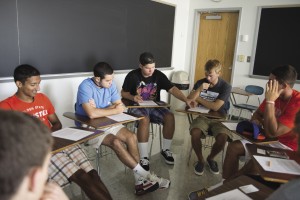
In the grand scheme of things, a very small percentage of the roughly 1,500 cases that come before judicial affairs at JMU go through a by-the-book restorative justice process. In the first year he began the new approach, Bacon handled fewer than 10 cases this way; last year, it was perhaps a few more than that. Sometimes there鈥檚 not a clear-cut victim. Sometimes either the victim or the offender may not agree to meet with the other party. And sometimes, the judicial affairs staff just doesn鈥檛 have the time and resources to handle more cases in this new way.But Bacon and his colleagues have realized that the ideas and processes of restorative justice have far wider application than simply dealing with the aftermath of some sort of bad behavior. A talking circle, for example, provides a great structure for all the members of a group to contribute to a discussion. And in this proactive sense, restorative justice has been finding even wider application yet at JMU.
In addition to applying restorative justice techniques to student discipline cases, part of Ehrhart鈥檚 job is encouraging the use of restorative practices as a community-building tool for various groups on campus. Ehrhart, a 2008 JMU grad who earned his master鈥檚 at 91短视频 three years later, has begun teaching others to lead circle processes at JMU鈥檚 presidential leadership academy, a week-long summer event to develop the skills of student leaders on campus.
Eliana Jerez-Givre, president of the Madison HIV/AIDS Alliance, was among those student leaders who learned about circle processes from Ehrhart at the leadership academy. In the fall of 2013, she led the other members of her organization鈥檚 executive board through a circle process to develop better planning for what they鈥檇 like to accomplish.
鈥淭he technique helped a lot,鈥� says Jerez-Givre, a junior. 鈥淪ince then we have been productive and each individual has taken the initiative to do their part for the executive team.鈥�
Senior Liz Ramirez is another student leader who learned about circle processes from Ehrhart. She is executive director of JMU SafeRides, an organization that provides free rides home to JMU students on weekends. The group鈥檚 executive board has 21 members, some of whom speak often and some of whom rarely wade into an unstructured conversation. Passing a talking piece around a circle, she says, encourages wider input, better listening and better decision-making.
鈥淓veryone knows that they鈥檙e going to get their turn, and it鈥檚 easier for everyone to listen to each other,鈥� Ramirez says.
Integrated into student orientation
The circle process has been embraced to such a degree at JMU that when 4,200 first-year students arrived on campus for orientation in August 2013, all of them received a crash-course in using talking circles to discuss challenging ethical questions.
As part of its orientation program, JMU created a film about the aftermath of a hurricane hitting New York City. It places the viewer in the position of a government decision-maker faced with a dilemma of where to concentrate and prioritize relief efforts. At their orientation, all incoming first-year students watched the film, and then broke into eight-person groups to discuss 鈥� using a circle process 鈥� how they would make decisions about hurricane response.
These discussion groups were led by 170 faculty, staff and older students who had previously been trained to lead circle dialogues.
鈥淭he incoming students just loved it. They felt safe. They felt comfortable. They loved that nobody could dominate the conversation,鈥� says Bacon. 鈥淐ircles created a safe space for students to deal with these deeper ethical issues.鈥�
Afterwards, Bacon told Zehr, his restorative justice mentor, that the circle processes made for the best program ever held for incoming students. 鈥淭hank you so much for introducing me to this process,鈥� he wrote to Zehr in an email. 鈥淚t really is transformative and I am excited to see what JMU and what JMU students can now do with this.鈥�
Art Dean, JMU鈥檚 special assistant to the president for diversity, was one of the facilitators who led the talking circles for incoming first-year students at their orientation.
鈥淚 was very excited about this process,鈥� says Dean. 鈥淚t was powerful for students to hear different experiences and different opinions from their peers.鈥�
As the talking piece went around the circle, students discussed how their own life experiences affected the ways they would make decisions about the questions posed by the hurricane film.
鈥淭his process has forced us as a community to have conversations about things that we might not have had to otherwise,鈥� Dean says. 鈥淚t forced us to contemplate other perspectives in our decision-making.鈥�
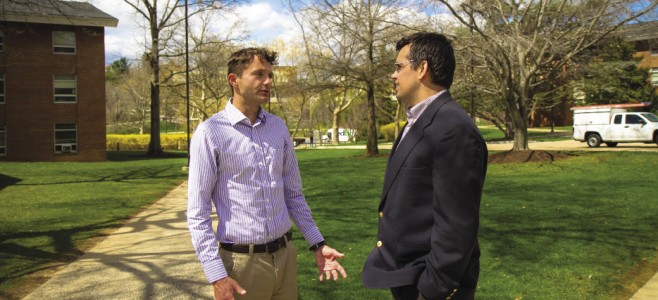
For nearly two decades, Zehr and others have pioneered restorative justice as an academic discipline at 91短视频. Now, across town at one of the biggest universities in Virginia, restorative justice is being put to widespread, groundbreaking use to resolve conflict and build a stronger community.
Dean points to the JMU mission statement: 鈥淧reparing students to be educated and enlightened citizens who lead productive and meaningful lives.鈥� Exposing practically every member of JMU鈥檚 incoming class of 2018 to the circle process, Dean continues, gives each of them a new tool to do just that.
鈥� Andrew Jenner 鈥�04
1. These are not these students’ real names
2. The talking circle has been borrowed from certain First Nations traditions. Sitting in a circle, only the person holding the object (鈥渢alking piece鈥�) may speak, while the others in the circle listen attentively. He or she then passes the object to an adjacent person, who may talk if desired or silently pass it to the next person, until the object comes around the circle again, giving everyone multiple opportunities to share their thoughts and feelings, if desired.
3. Josh Bacon, PhD, holds degrees from Clemson University in educational leadership, with a cognate in law, and from Salisbury University in education administration, with a concentration in counseling. Bacon enrolled in the graduate program at CJP 鈥渏ust because I like learning about this stuff 鈥� I don鈥檛 need another degree!鈥�