
Jonathan McRay MA ’13 (conflict transformation) is 91短视频’s sustainability and social justice curriculum consultant. As co-founder of in Harrisonburg, McRay has hosted practicum experiences for undergraduates majoring in peacebuilding and development and graduate students at 91短视频’s Center for Justice and Peacebuilding.
This article by reporter Kathleen Shaw appeared in the 1/21/21 issue of the Daily New-Record.
***
For generations, farming has entailed large acreages of land neatly sowed and harvested for commercial crops, but niche pockets across Virginia are reclaiming the land and planting produce with restorative intentions at the heart of their work.
New age farming is like organic farming on steroids. Growers are not only ditching the chemical fertilizers and insecticides they argue poison the land; they鈥檙e allowing nature to control the direction of what is grown to promote a healthier, more bountiful farm. And it鈥檚 probably happening in your backyard.
Blacks Run is an urban waterway that courses through downtown Harrisonburg before eventually connecting to the North River. Impassioned to act by the water鈥檚 pollution and neighborhood鈥檚 diversity, Jonathan McRay and Cornelius Frantz founded three years ago as a land restorative farming operation in partnership with the community. It鈥檚 located off North Main Street north of downtown.
At first glance, Silver Run Forest Farm appears a far cry from what anyone could call a farm. There鈥檚 overgrowth, an assortment of trees and shrubbery haphazardly sprouting from the ground and not one tidy row of crop in sight. But the neighbors living alongside Blacks Run have contributed their grassy lawns to the communitywide cultivation of produce, trees and vegetation 鈥� welcoming what grows where it intuitively seeds.
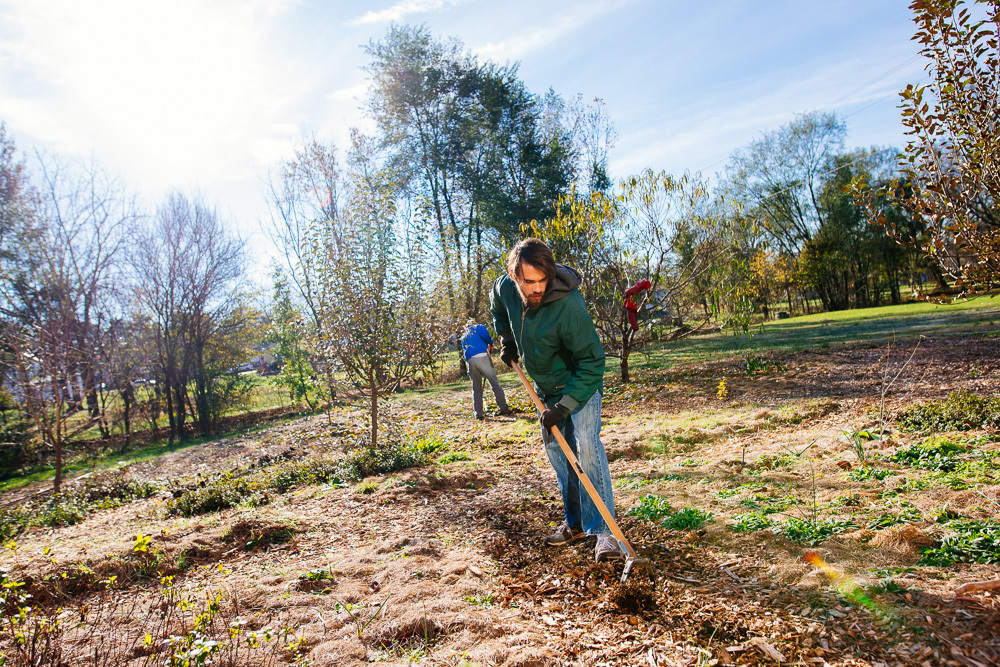
The seemingly random plots of growth along Blacks Run are more than glamorized gardening or a hobby gone wild 鈥� urban farming is a practice that has silently crept from industrialized hubs like Brooklyn, N.Y., to the quiet neighborhoods of Harrisonburg. Each harvest is intentional, each resource given purpose and each step of undergrowth assigned value.
At Silver Run Forest Farm, growing season may be over, but there is plenty to harvest. From the surrounding walnut and sycamore trees, the farmers can tap syrup. From cut branches not being propagated for sale, the farmers create charcoal to fertilize the soil. From the hickory nuts, oil and chutneys are mixed.
McRay said Silver Run Forest Farm was born as a means of sustaining a steady economic stream that could additionally care for and heal the land, people and waterway.
鈥淕rowing food but also creating a bountiful, restful place for neighbors,鈥� McRay said. 鈥淗ow can we set up a structure of a farm that is not only tending land but also is a beautiful and gift-giving member of the community?鈥�
Four miles away off Va. 42 north of the city, focuses on regenerative practices to repair the soil, which was sapped of nutrients by the pasture and crops that previously occupied the lot. Calvin Nolt is a partner and owner of Woods Edge Farm, where he grows vegetables, berries and raises pastured chickens and cattle.
Nolt said rebuilding a healthier soil yields healthier harvests, and he鈥檚 seen an incremental growth in fellow growers practicing restorative farming.
鈥淚t鈥檚 not so much as a big movement all across, but it鈥檚 individuals here and there deciding to do it differently,鈥� Nolt said.
In fact, Nolt said the shift to more wholesome farming is simply a regression to the farm work people originally practiced 100 years ago before industries vilified certain growth and promoted chemical sprays.
鈥淚t鈥檚 not new 鈥� it鈥檚 an old way. It鈥檚 the way people used to do it,鈥� he said. 鈥淚t鈥檚 more looking at it as multiple different systems and trying to get them to work together well instead of working against nature and learn to work with it.鈥�
Tony Banks is the senior assistant director of the Agriculture, Development and Innovation Department for Virginia Farm Bureau Federation. He said there are niche pockets of agroforestry and restorative farming throughout the state, but Virginia growers have widely adopted minimum or no-till planting systems to protect the soil since the 1960s.https://88294af433a445f480486c5a0f0ea9e8.safeframe.googlesyndication.com/safeframe/1-0-37/html/container.html
What today is known as restorative or regenerative agriculture was called low-input sustainable agriculture in the late 1980s, Banks said. Whatever name you call it, Banks said the practice can require specialized equipment and years to see payoff, which isn鈥檛 worth the expense for many farmers renting land.
鈥淎 lot of the cropland that is farmed in Virginia is rented, so there鈥檚 no guarantee that a farmer will have access to the farmland he鈥檚 renting beyond his lease,鈥� Banks said, distinguishing supplemental and commercial farming. 鈥淢ajority of farming is not going to fit into that agroforestry-type situation where you need to produce millions of bushels of corn or soybeans or wheat in order to provide for the majority of food items that are found in the grocery store.鈥�
In the future, Banks predicts farms will creep vertically into cityscapes, both on walls and indoors.
鈥淲e will continue to see farmland to urbanization,鈥� he said. 鈥淧roduction is going to have to become more effective at producing yields to continue to provide not only the same amount of food but more food.鈥�
In contemporary farming practices, McRay said farmers are using harsh chemicals and equipment that exploit the land and reap its nutrition, spelling disaster for future generations of growers.
鈥淭here鈥檚 lots of challenges and harm that鈥檚 done in the agriculture model we have, from chemical use of pesticides and fertilizers that cause the death of so many insects and creatures, that leach into waterways. The massive machinery and scale of farming causes a lot of soil erosion and compaction,鈥� he said.
Still, the pressure to reform cannot be placed entirely on the shoulders of individuals and small-operation farms.
鈥淚 want to be hesitant in putting all this pressure on individual people or single farms to figure out how they can change when there鈥檚 so much economic pressure, so many legal decisions made outside the farm that really need to be challenged,鈥� he said. 鈥淚t doesn鈥檛 mean people can鈥檛 do wonderful things on a small scale, we need that, but I think it鈥檚 the linking up on a large scale that make it viable.鈥�
Harrisonburg City Council adopted an urban forestry and pollinator program in 2018 to convert traditional grassy landscapes to pollinator habitats to promote community interaction with the land. Last year, the Department of Forestry awarded the city with a community forestry grant, which is being used to partner with consultants.
Jeremy Harold, Harrisonburg Public Works Department鈥檚 green space manager, said the growing ideology of small-scale intuitive farming is bountiful, intentional and steadily being adopted by area residents.
鈥淵ou can just see a change over the last five or 10 years. … Not only locally, but across the country, being more aware of their surroundings doing things on a smaller scale where they can help out in their own backyard to help with the environment,鈥� Harold said. 鈥淭rees and pollinators can all benefit and help provide the benefits of reducing our stormwater and making Blacks Run cleaner. So, it鈥檚 all kind of tied together.鈥�
Harold has worked alongside Silver Run Forest Farm in the past and praised Frantz and McRay for their ingenuity and optimization in urban farming. In the future, Harold hopes the city can take the idea of urban orchards and expand the presence of community farms.
鈥淭hey take the opportunity to utilize every piece of the land. 鈥� They鈥檙e very resourceful in utilizing everything, all the land, in just a small space,鈥� Harold said. 鈥淭he community can learn to be more diverse and plant pollinators and trees that benefit our local ecosystem.鈥�
What an inspiring story! – Earl Martin
Great work! Also look at English Pastoral by James Rebanks for a fantastic look at exactly these issues.